
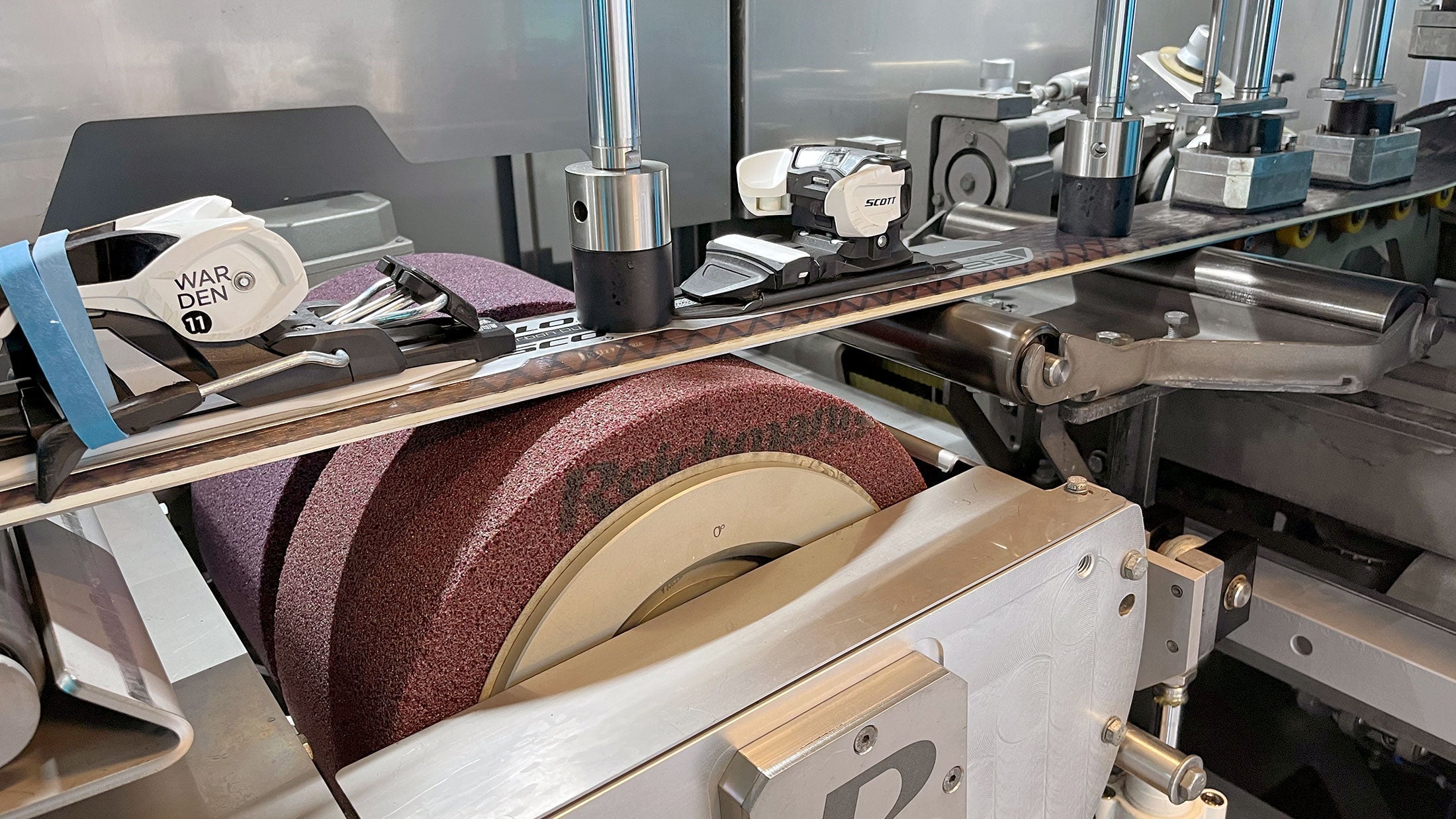
When it comes to ski and snowboard tuning, your grinding method is not just a detail—it directly impacts performance, durability, and customer satisfaction. If you’re running a shop or considering equipment investment, choosing the right grinding system is a business decision, not just a technical one.
Let’s break down stone grinding vs belt grinding vs Vario belt grinding—what they actually do, where they win, and where they fall short.
Why Grinding Method Matters
Grinding isn’t just about making a base look clean. It determines:
-
Base flatness
-
Structure (how water moves under the ski)
-
Edge precision
-
Wax retention
-
Overall glide performance
In short: bad grinding = slow skis and unhappy customers.
“Whatever you do, work at it with all your heart…” — Colossians
If you’re going to tune skis, do it right. Half-measures show on snow.
1. Belt Grinding (Traditional Method)
What it is
Belt grinding uses an abrasive belt (like sandpaper) to remove material and flatten the ski base.
How it works
-
Ski passes over a rotating belt
-
Pressure removes base material quickly
-
Typically used as a pre-grind or repair step
Pros
-
Fast material removal
-
Great for base repair prep
-
Lower upfront cost
-
Simple to operate
Cons (this is where it matters)
-
❌ No structure control – you’re not actually creating a proper base pattern
-
❌ Heat buildup – can damage the base if not handled right
-
❌ Inconsistent finish
-
❌ Not suitable for high-performance tuning
Bottom line
Belt grinding is a tool, not a solution. If you’re relying on it alone, you’re running a low-end operation, whether you realize it or not.
2. Stone Grinding (Industry Standard)
What it is
Stone grinding uses a rotating stone to both flatten the base and apply a precise structure pattern.
How it works
-
Diamond tools dress the stone
-
Structure is programmed and transferred to the ski
-
Water cooling prevents overheating
Pros
-
✅ Precision structure patterns (race-ready)
-
✅ Excellent base flatness
-
✅ Consistent results
-
✅ Supports different snow conditions
-
✅ Industry gold standard
Cons
-
Higher upfront investment
-
Requires training and maintenance
-
Slower than belt for heavy removal
Why structure matters
Structure controls how water behaves under the ski:
-
Cold snow → fine structure
-
Warm/wet snow → coarse structure
With stone grinding, you can actually match conditions, which is impossible with basic belt systems.
Bottom line
If you want performance tuning, race prep, or serious credibility, stone grinding is non-negotiable.
3. Vario Belt Grinding (Hybrid Technology)
What it is
Vario belt grinding is an advanced system that combines the speed of belt grinding with controlled structuring capabilities.
This is where things get interesting.
How it works
-
Uses specialized belts with structured patterns
-
Adjustable pressure and speed
-
Can mimic some stone grinding effects
Where Vario Belt Has a Unique Advantage
Vario belt systems are often preferred for snowboards and wider skis, and here’s why:
Unlike race skis, snowboards, and many wide skis are not perfectly flat. Traditional stone grinding relies on consistent contact across a flat surface, which can be harder to achieve on these shapes.
With a vario system, a softer (lower duro) contact roller or pressure system allows the belt to better conform to the base. This creates more consistent contact across uneven or slightly convex/concave surfaces, resulting in a more uniform grind.
Bottom line:
-
Better contact on non-flat surfaces
-
More consistent results on snowboards
-
More forgiving across varied shapes
This is where Vario belt grinding genuinely outperforms rigid systems.
Pros
-
✅ Faster than stone grinding
-
✅ More control than traditional belt grinding
-
✅ Lower cost than full stone systems
-
✅ Strong performance on snowboards and wide skis
Cons
-
❌ Still not as precise as stone grinding
-
❌ Limited structure complexity
-
❌ Belt wear affects consistency
-
❌ Not ideal for high-level race tuning
Bottom line
Vario belt is a strategic middle ground—and for snowboard-heavy shops, it’s not just a compromise, it’s often the smarter choice.
Which Grinding Method Should You Choose?
If you’re a serious ski shop:
→ Stone Grinding
You need:
- Repeatable results
- Precise structure control
- High-end finish quality
Anything less and you’re not competing at a performance level.
If you’re a snowboard-heavy or mixed shop
→ Vario Belt Grinding (or combo system)
This is where vario actually becomes the smarter choice—not just a compromise.
Snowboards and many modern wide skis are not perfectly flat, which makes consistent stone contact more challenging. A vario system, using a softer (lower duro) contact pressure, adapts better to those surfaces and maintains more even contact across the base.
That means:
- More consistent grinding on snowboards
- Better results on wide or slightly uneven skis
- Less dependency on perfect flatness
You still get speed and flexibility, but more importantly, you get reliable results across a wider range of equipment.
If you’re a small or budget-conscious shop
→ Vario Belt or Entry-Level Setup
You get:
- Faster turnaround
- Lower upfront investment
- Solid general-purpose results
Just understand the ceiling—this won’t replace high-end stone performance for race customers.
If you’re only doing repairs
→ Belt Grinding (as support only)
Use it for:
- Base flattening before finishing
- Removing heavy damage
Not as your final product if you care about performance.
The real decision
It comes down to this:
- Race/performance focus → Stone
- Snowboard + versatility focus → Vario
- Repairs only → Belt
There’s no one-size-fits-all—but there is a right tool for your shop.
The Real Business Decision
This isn’t just about machines—it’s about positioning.
Ask yourself:
-
Do you want to be the cheap option?
-
Or the shop people trust with $1,500 skis?
Because customers can’t always explain structure… but they can feel slow skis immediately.
Future of Grinding Technology
The industry is moving toward:
-
Automation
-
Programmable structures
-
Faster throughput with precision
Stone grinding systems (like Reichmann machines) are leading here, especially with digital control and repeatable patterns.
Vario systems are improving, but they’re still a compromise.
Ready to Upgrade Your Grinding Setup?
Choosing the right grinding method isn’t just about equipment—it’s about the kind of shop you want to run.
At Reichmann USA, we help you make that decision based on reality, not guesswork.
Whether you’re:
- Moving from basic belt grinding to a real performance setup
- Adding capacity for snowboard-heavy volume
- Or building a shop from the ground up
We’ll point you to the system that actually fits your business.
What You Get With Reichmann
- Proven stone grinding systems for high-performance tuning
- Advanced vario belt solutions for versatility and snowboard optimization
- Equipment built for consistency, speed, and long-term reliability
- Direct U.S. support, parts, and service
No fluff. No overselling. Just the right setup for your goals.
If you’re serious about:
- Better results
- Faster turnaround
- And customers who actually come back
Then it’s time to upgrade.
👉 Contact our team today to talk through your setup and get matched with the right machine.
Preparing Your Ski Shop for the End-of-Season Service Rush
5 Ways to Extend Your Ski Equipment Lifespan